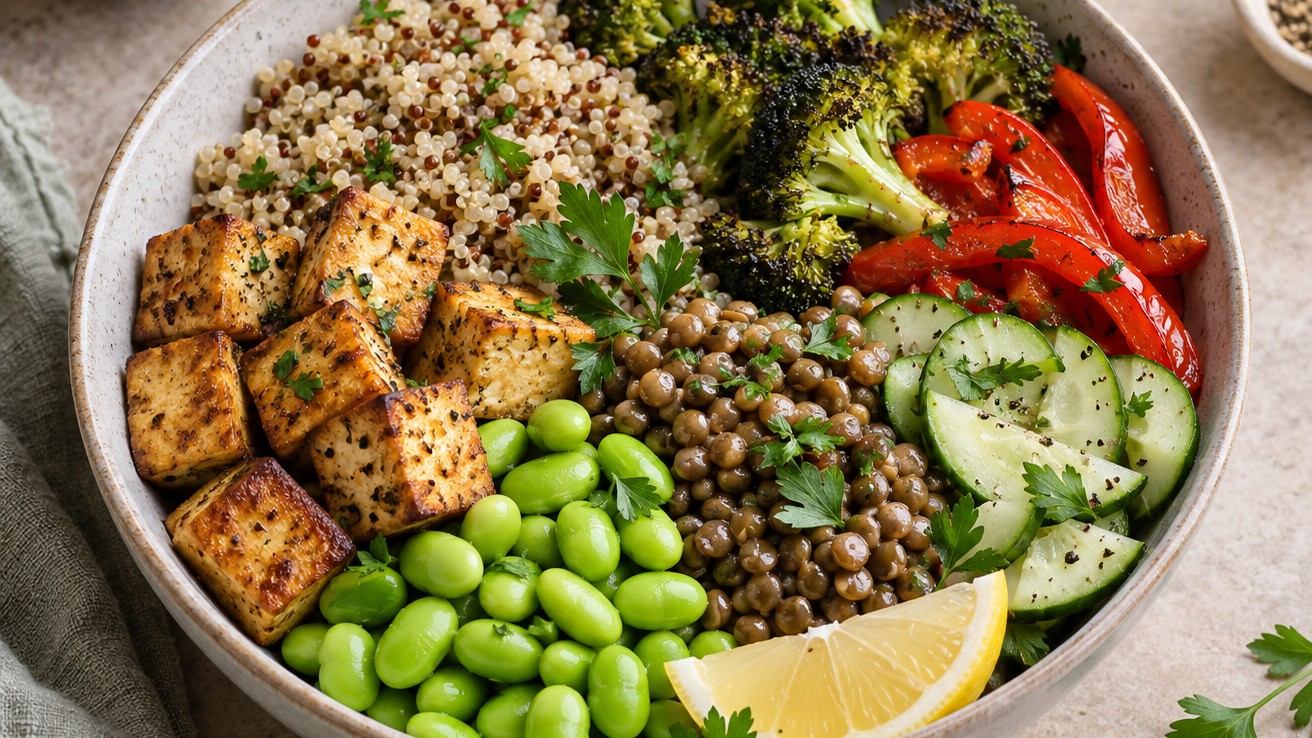
Building a 40g protein vegetarian meal is possible without turning dinner into a pile of protein bars or a complicated nutrition project. The practical trick is to stop asking one food to do all the work. Start with a substantial protein anchor, add a second useful source, then finish the plate with vegetables, seasoning and a sauce you actually enjoy.
One important boundary comes first: 40 grams is a meal-building target in this guide, not a universal prescription for everyone over 40. Your daily protein needs can vary with age, exercise, health conditions and your overall eating pattern. If you have been given a protein limit or a medical nutrition plan, follow that plan rather than a general article. For help estimating your own daily range, start with our guide to how much protein you may need after 40.
The seven combinations below land at approximately 40 grams because their portions were calculated from specified USDA FoodData Central records. They are useful templates—not laboratory-tested recipes—and your package label may produce a different total.
The simplest formula for a 40g protein vegetarian meal
Think in pairs:
- Choose a main anchor: tofu, tempeh, eggs, Greek yogurt or cottage cheese.
- Add a supporting source: lentils, beans, chickpeas, edamame or a cooked whole grain.
- Build the rest of the meal: vegetables, herbs, spices and a measured dressing or sauce.
This is more dependable than assuming that a scoop, block or cup always contains the same amount. Tofu, yogurt and cottage cheese can vary considerably, so use the gram weights below as examples and check the label on the product in your kitchen.
Seven protein bases at a glance
| Dinner build | Protein ingredients counted | Estimated protein |
|---|---|---|
| Tofu-quinoa vegetable bowl | 200g firm tofu + 150g cooked quinoa | 41.1g |
| Lentil bowl with yogurt sauce | 200g cooked lentils + 225g plain nonfat Greek yogurt | 41.2g |
| Tempeh-edamame stir-fry | 130g cooked tempeh + 130g prepared edamame | 41.4g |
| Egg and cottage-cheese plate | 100g hard-boiled egg + 250g 2% cottage cheese | 40.1g |
| Edamame-lentil chopped salad | 200g prepared edamame + 180g cooked lentils | 40.1g |
| Tofu-chickpea curry bowl | 150g firm tofu + 160g cooked chickpeas | 40.1g |
| Tempeh-black-bean taco filling | 125g cooked tempeh + 180g cooked black beans | 40.8g |
What the totals include: only the protein ingredients named in the table. Vegetables, oils, sauces, toppings, tortillas and other sides are not included. Those additions may contribute more protein, but they also change calories, sodium and the rest of the nutrition profile.
1. Tofu-quinoa vegetable bowl — 41.1g
Protein base
- 200g firm tofu, weighed before cooking: 34.5g protein
- 150g cooked quinoa: 6.6g protein
Roast or pan-sear the tofu, spoon it over warm quinoa, and add broccoli, red pepper or whatever vegetables need using up. A lemon-herb dressing keeps the flavors bright. If you use oil, tahini, nuts or seeds, measure them when calories matter to you; they are not part of the total above.
This calculation uses a calcium-set firm tofu with 17.27g protein per 100g. Another firm tofu may contain less or more, so this is one meal where the package label matters.
2. Savory lentil bowl with Greek-yogurt sauce — 41.2g
Protein base
- 200g cooked lentils: 18.0g protein
- 225g plain nonfat Greek yogurt: 23.2g protein
Season the lentils with cumin, black pepper and a squeeze of lemon. Stir chopped herbs and garlic into the yogurt, then add cucumber, tomato and greens. The result sits somewhere between a lentil salad and a generously sauced grain-free bowl.
If you prefer a higher-fat yogurt, use it if it fits your needs—but calculate from that label instead of borrowing the nonfat yogurt number.
3. Tempeh-edamame vegetable stir-fry — 41.4g
Protein base
- 130g cooked tempeh: 25.9g protein
- 130g prepared edamame beans: 15.5g protein
Stir-fry the tempeh with mushrooms, shredded cabbage and bell pepper. Fold in the edamame near the end and finish with ginger, lime and your preferred savory sauce.
The tempeh weight here is for the cooked food represented in the USDA record. If you measure a packaged product before cooking, use its label rather than assuming the cooked database value transfers exactly.
4. Egg and cottage-cheese vegetable plate — 40.1g
Protein base
- 100g hard-boiled egg, approximately two large eggs: 12.6g protein
- 250g 2% cottage cheese: 27.5g protein
Serve the eggs and cottage cheese with sliced tomatoes, cucumber and radishes. Add whole-grain toast if desired, but remember that it is not included in the 40.1g total. Pepper, dill, chives or smoked paprika make this feel more like dinner than a rushed breakfast.
Cottage cheese is especially label-dependent. Compare protein and container serving sizes. The calculation here uses the USDA Foundation Foods entry for 2% cottage cheese, not every product sold under that name.
5. Edamame-lentil chopped salad — 40.1g
Protein base
- 200g prepared edamame beans: 23.8g protein
- 180g cooked lentils: 16.2g protein
Toss the edamame and lentils with chopped cabbage, carrots, cucumber and fresh herbs. Add a sharp vinaigrette just before eating. The sturdy base also makes this one of the easier options to pack for lunch the next day.
USDA lists 155g as one cup of prepared edamame and 198g as one cup of cooked lentils, so a kitchen scale is more reliable than trying to estimate these larger portions by eye.
6. Tofu-chickpea curry bowl — 40.1g
Protein base
- 150g firm tofu, weighed before cooking: 25.9g protein
- 160g cooked chickpeas: 14.2g protein
Simmer the tofu and chickpeas with tomatoes, spinach, ginger and curry spices. Serve it as a thick bowl or add a measured portion of rice. Coconut milk, oil, rice and naan can all fit into a meal, but they are not included in this protein calculation or any calorie estimate.
One cup of cooked chickpeas weighs about 164g in the USDA portion record, making this build fairly easy to measure once you have weighed it a few times.
7. Tempeh-black-bean taco filling — 40.8g
Protein base
- 125g cooked tempeh: 24.9g protein
- 180g cooked black beans: 15.9g protein
Crumble the tempeh and warm it with the beans, cumin, chili powder and tomatoes. Spoon the filling into tortillas or over shredded lettuce, then add salsa, cabbage and lime.
The 40.8g estimate covers the filling only. Tortillas, cheese and other toppings can change both protein and calories, so count them separately if you are tracking closely.
Do vegetarian meals have to contain “complete” protein?
The phrase complete protein appears often in vegetarian meal searches. The more useful starting point is that nine amino acids are considered essential: your body cannot make them, so they must come from food.
That language can make vegetarian meal planning sound like a chemistry exam. It does not need to be one. MedlinePlus explains that people do not need animal products to obtain all the protein they need, and that essential amino acids do not all have to be eaten at every meal. Balance across the whole day matters more.
So if you arrived looking for complete protein vegetarian meals or complete protein vegetarian recipes, do not treat every plate as a pass-or-fail amino-acid test. Eat a varied pattern that includes foods such as beans, lentils, soy foods, whole grains, nuts, seeds, eggs or dairy according to your preferences. Several of the builds above use more than one protein source simply because that is an easy way to reach the meal total and create a satisfying plate—not because every bean must be “completed” before you leave the table.
What about easy high-protein, lower-calorie vegetarian meals?
The search phrase “easy high protein low calorie vegetarian meals” combines three reasonable wishes, but “low calorie” has no single useful cutoff for every person. It is also impossible to judge the finished plate from the protein anchors alone.
If you want a lower-calorie version of one of these meals:
- Fill out the plate with vegetables you enjoy.
- Measure cooking oil, creamy dressings, tahini, nuts and cheese instead of pouring by eye.
- Compare plain yogurts and cottage cheeses by serving size rather than front-label claims.
- Use broth, tomatoes, citrus, herbs and spices to add flavor where they work.
- Count tortillas, rice, bread and toppings as part of the meal—not invisible extras.
None of the seven builds is advertised as being under a particular calorie threshold because the vegetables, sauce, cooking fat and sides are deliberately flexible. If a calorie target matters for medical or personal reasons, calculate the whole meal from the exact products and amounts you use.
How these search phrases translate into a sensible plan
Search queries are not always written like normal sentences. Phrases such as “healthy high protein meals vegetarian,” “high protein diet for vegetarian,” and “high protein diet vegetarian” all point toward the same practical question: how can a vegetarian distribute enough protein across ordinary meals without losing sight of the rest of the plate?
A useful answer is broader than chasing a single number. Choose protein foods you enjoy, include vegetables and fiber-rich foods, and make portions fit your overall needs. Harvard’s Nutrition Source calls this the protein “package”: foods bring other nutrients and components along with their protein. Our guide to combining protein and fiber after 40 can help you build out the rest of the plate.
How the protein totals were calculated
Each total follows the same formula:
Protein per 100g × portion weight in grams ÷ 100
Individual contributions were added before the final meal total was rounded to one decimal place. The records came from the USDA FoodData Central SR Legacy archive and the April 2026 Foundation Foods archive.
This method is transparent, but it is not perfect. Food composition changes with variety, moisture, preparation and brand. A home portion may also be several grams heavier or lighter than the number on a scale. Treat 40.1g and 41.4g as practical estimates—not laboratory precision.
Frequently asked questions
Is 40g of protein at dinner necessary after 40?
No universal rule says every adult over 40 needs 40g at dinner. This article uses 40g because readers are searching for a concrete meal-building example. Your appropriate amount depends on your daily needs and what you eat at other meals. A registered dietitian can help if you need an individualized target.
Can I build a 60g protein vegetarian meal?
A 60g protein vegetarian meal is technically possible, but possible does not mean necessary or better. Using the same USDA records, 250g cooked tempeh plus 100g prepared edamame calculates to about 61.7g protein. That is a substantial portion and is included only to demonstrate the math—not to recommend it. Start with your daily needs before deciding how much belongs in one sitting.
Which of these meals are vegan?
The tofu-quinoa bowl, tempeh-edamame stir-fry, edamame-lentil salad, tofu-chickpea curry and tempeh-black-bean filling use plant foods in their calculated bases. Check sauces, tortillas and packaged products if you avoid all animal-derived ingredients. The lentil-yogurt bowl and egg-cottage-cheese plate are vegetarian but not vegan.
Do I need protein powder to reach 40g?
No. Every example in this guide reaches approximately 40g using ordinary foods. Protein powder can be convenient for some people, but it is not required for these meals.
Can I substitute another tofu, yogurt or cottage cheese?
Yes, but recalculate. Multiply the protein shown on your label by the number of servings you actually use. Do not assume that every product with the same name matches the USDA entry.
Are these seven full recipes?
They are flexible dinner builds rather than formally tested recipes. The measured protein base is fixed; vegetables, seasonings, cooking method and sauces are intentionally adaptable. For a broader list of ideas with lower per-serving targets, see our high-protein vegetarian meals for adults over 40.
The takeaway
A vegetarian dinner can reach approximately 40g of protein without powder and without obsessing over whether every ingredient is “complete.” Pair two meaningful protein sources, weigh the foods that vary most, and use your own labels when they differ from the examples.
Most importantly, keep the number in context. Forty grams is a useful construction exercise—not a verdict on whether a meal is healthy, and not a target everyone must meet. The best plan is one that fits your full day, preferences, health needs and appetite.
Sources and calculation notes
- USDA FoodData Central downloadable datasets
- MedlinePlus: Protein in Diet — reviewed April 1, 2025
- Harvard T.H. Chan School of Public Health: Protein
Accuracy note: The meal estimates use exact USDA records and gram weights, but foods and brands vary. The calculations are planning estimates, not laboratory analyses or individualized nutrition advice.