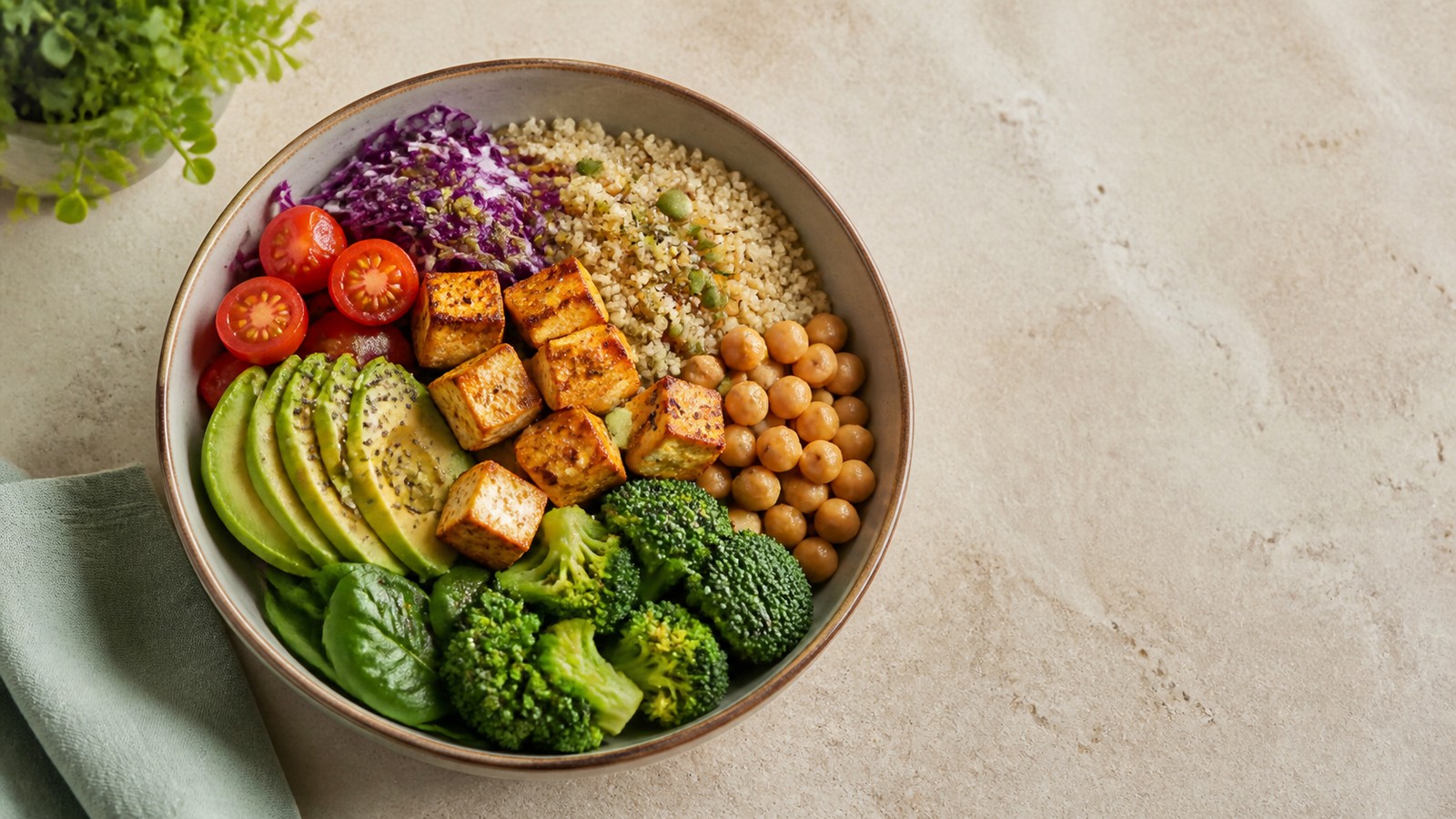
Protein and fiber after 40 belong in the same conversation. Protein gets most of the attention in midlife nutrition. Yet a day can look impressively “high protein” and still be short on beans, whole grains, fruit, vegetables and seeds—the foods that bring fiber to the table.
This is not an argument for replacing one nutrition obsession with another. Protein and fiber do different jobs, and a practical meal can make room for both. Vegetarian meals also have several double-duty options: lentils, beans, edamame, nuts and seeds contribute to both columns.
Below, you will find the North American fiber reference values for adults over 40, a simple meal-building formula, and nine pairings calculated from USDA food-composition data. The amounts are examples, not personalized targets or medical advice.
The quick answer: Keep a clear protein food at each main meal, then ask where the fiber is coming from. Beans and lentils do both jobs. Dairy and eggs supply protein but no fiber, so pair them with fruit, vegetables, whole grains or seeds. If your current diet is low in fiber, increase it gradually and drink enough fluids.
Why Protein Alone Does Not Make a Balanced Meal
Protein supplies amino acids that the body uses to build and maintain tissues. That matters throughout adulthood, and maintaining muscle becomes an increasingly practical priority as the years go by. But protein does not replace everything else on the plate.
Fiber is the part of plant foods that the body cannot digest. HealthLink BC explains that insoluble fiber can help keep the gut healthy and prevent constipation, while soluble fiber can help lower blood cholesterol, control blood sugar and prolong fullness.
The mismatch is easy to see at breakfast. Plain Greek yogurt is a useful protein food, but it contains essentially no fiber. Add raspberries and chia, and the same bowl becomes more complete. Eggs are similar: dependable protein, no fiber. Whole-grain toast and avocado change the picture.
Legumes make the job simpler. Lentils, chickpeas and black beans provide meaningful amounts of both nutrients, which is one reason they work so well in vegetarian meals.
How Much Fiber Do You Need After 40?
North American reference intakes do not use age 40 as a cutoff for fiber. The official Dietary Reference Intake table groups adults by age and sex. For the ages relevant to this site, it lists these Adequate Intakes:
| Age | Male | Female |
|---|---|---|
| 40–50 | 38 g/day | 25 g/day |
| 51 and older | 30 g/day | 21 g/day |
These values come from the Health Canada DRI table used for North American reference intakes. The table bases the fiber figures on 14 grams per 1,000 calories and median energy intake. That helps explain why the listed amount falls at age 51; it does not mean fiber suddenly becomes less useful.
An Adequate Intake is a population reference for apparently healthy people, not a diagnosis or a personal prescription. Your needs may differ if you have a digestive condition, have been told to follow a low-fiber diet, are pregnant or breastfeeding, or have other medical considerations.
Where Protein Fits
For healthy adults, the standard protein Recommended Dietary Allowance is 0.8 grams per kilogram of body weight per day. That is a reference amount designed to cover the needs of nearly all healthy adults, not one perfect target for every person over 40.
Age, training, recovery and health conditions can change the conversation. Rather than repeat that full debate here, our guide to how much protein you need after 40 explains the official minimum, older-adult expert ranges and exercise-related guidance.
Vegetarians do not automatically need a separate protein requirement. Health Canada’s DRI table notes that mixed plant proteins can provide adequate protein quality. That does not mean every vegetarian pattern is adequate by default: the Academy of Nutrition and Dietetics’ 2025 position is that appropriately planned vegetarian and vegan dietary patterns can be nutritionally adequate for adults.
A Practical Plate for Protein and Fiber After 40
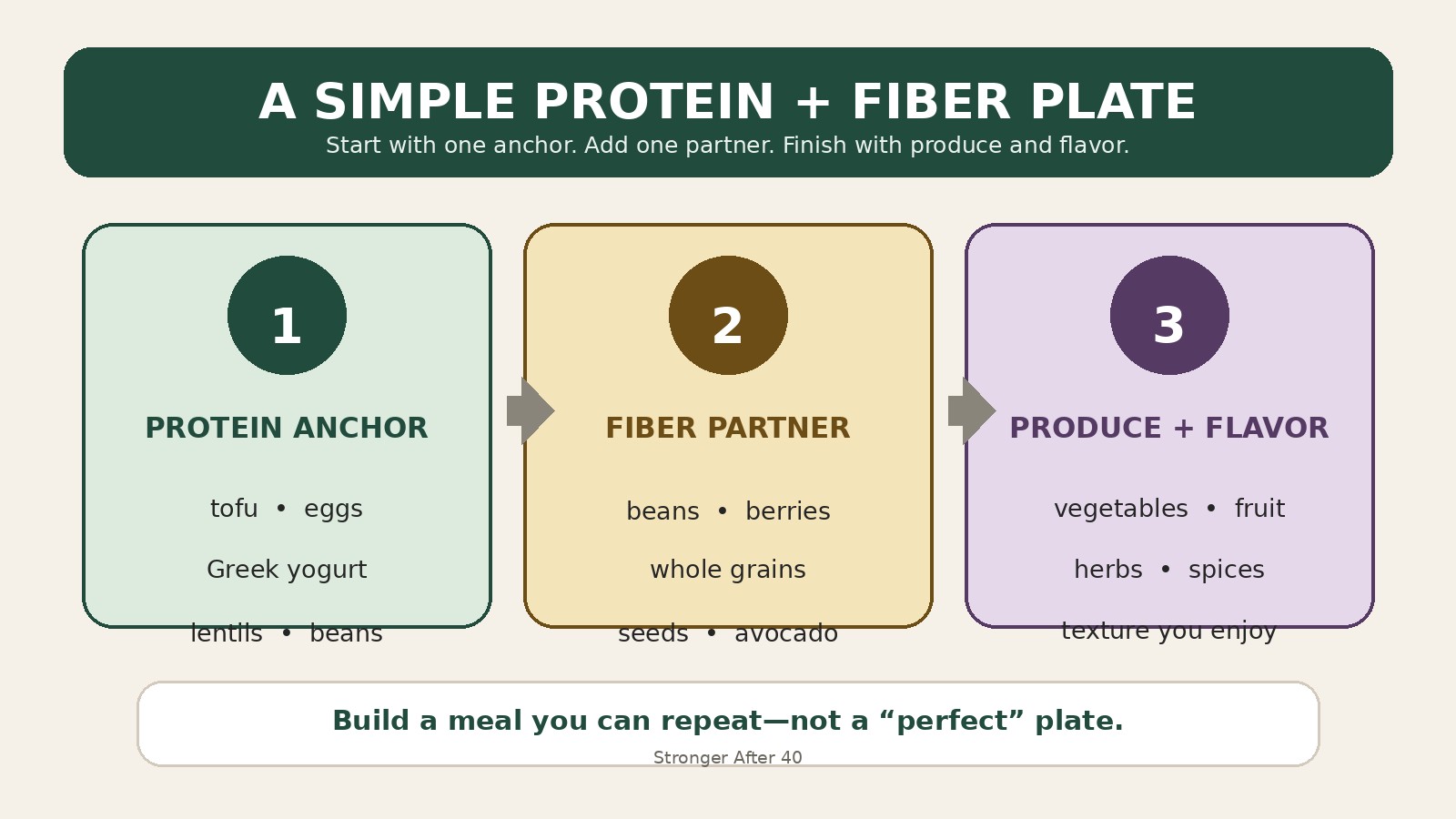
You do not need to calculate every meal. Start with three questions:
- What is the protein anchor? Choose beans, lentils, tofu, tempeh, edamame, Greek yogurt, cottage cheese or eggs.
- What is the fiber anchor? Add legumes, a whole grain, vegetables, fruit, nuts or seeds.
- What will make it worth eating again? Finish with herbs, spices, citrus, salsa, tahini, pesto or another flavor you enjoy.
Sometimes one food answers the first two questions. Beans, lentils and edamame are the obvious double-duty choices. At other meals, the partnership matters more: yogurt plus berries, eggs plus whole-grain toast, or tofu plus broccoli and brown rice.
9 Vegetarian Pairings With Protein and Fiber
The estimates below use explicit gram portions and unbranded USDA FoodData Central records. They are useful for comparing combinations, not predicting the exact content of your bowl. Tofu, bread, yogurt, cottage cheese, soy milk and nut butter can vary considerably by brand. Check the package label when the precise number matters.
| Pairing and example portion | Protein | Fiber |
|---|---|---|
| 170 g Greek yogurt + 125 g raspberries + 14 g chia | ~21.3 g | ~12.9 g |
| 200 g cooked lentils + 90 g cooked quinoa | ~22.0 g | ~18.3 g |
| 150 g edamame + 100 g cooked brown rice | ~20.6 g | ~9.4 g |
| 225 g cottage cheese + 180 g pear + 14 g chia | ~26.5 g | ~10.4 g |
| 170 g cooked black beans + 90 g cooked quinoa | ~19.0 g | ~17.3 g |
| 150 g firm tofu + 150 g cooked broccoli + 100 g cooked brown rice | ~32.2 g | ~10.0 g |
| 165 g cooked chickpeas + 100 g cooked pearled barley | ~16.9 g | ~16.3 g |
| 100 g cooked egg + 100 g avocado + 43 g whole-wheat bread | ~19.9 g | ~9.3 g |
| 40 g dry oats cooked with 243 g soy milk + 32 g peanut butter + 14 g chia | ~21.6 g | ~11.7 g |
1. Greek Yogurt, Raspberries and Chia
This is the easiest demonstration of the pairing idea. Yogurt carries most of the protein; raspberries and chia supply nearly all the fiber. Use plain yogurt and let the fruit handle the sweetness. If 14 grams of chia is a large change from your usual intake, start with less and increase fiber gradually.
2. Lentils and Quinoa
Lentils do most of the work here. Quinoa changes the texture and makes the bowl easier to dress with cucumber, tomatoes, parsley and lemon. It is a useful lunch to prepare ahead because both ingredients hold up well in the refrigerator.
3. Edamame and Brown Rice
Edamame is one of the strongest double-duty foods in this list. Add brown rice, cabbage, carrots and a ginger-lime dressing for a simple grain bowl. Frozen shelled edamame makes the combination practical on a busy day.
4. Cottage Cheese, Pear and Chia
Cottage cheese on its own is protein-rich but fiber-free. A pear and chia fix that without requiring a recipe. Cinnamon, walnuts or a little lemon zest can take it in a sweet direction; cucumber, pepper and herbs can turn the same cottage-cheese base savory, with fruit on the side.
5. Black Beans and Quinoa
Use this pairing for burrito bowls, stuffed peppers or a warm skillet with tomatoes and corn. Black beans contribute most of the protein and fiber. Quinoa adds texture and makes the meal easier to stretch across several servings.
6. Tofu, Broccoli and Brown Rice
The calculated protein total is high because the USDA record is for firm, calcium-set tofu. Your brand may be quite different, so this is one row where the label matters. Brown the tofu first, add broccoli, and finish with ginger, garlic and a lower-sodium sauce.
7. Chickpeas and Barley
Chickpeas and chewy barley work in soups, grain salads and roasted-vegetable bowls. Add spinach, herbs and a lemon-tahini dressing. If barley is not suitable for you, use quinoa or brown rice and recalculate the meal from the package labels.
8. Eggs, Avocado and Whole-Wheat Toast
Eggs provide protein, while avocado and whole-wheat bread bring the fiber. The USDA calculation uses 100 grams of cooked egg—roughly two large eggs—but size varies. Add tomatoes or greens for a more substantial plate.
9. Oats Cooked With Soy Milk, Peanut Butter and Chia
Cook oats with unsweetened fortified soy milk, then stir in peanut butter and chia. This combination works because each ingredient contributes something. Soy milk and peanut butter lift the protein; oats, peanut butter and chia supply fiber. Again, soy-milk brands differ, so check yours.
For more complete meals built around these foods, see our collection of 15 high-protein vegetarian meals for adults over 40.
What One Mix-and-Match Day Could Look Like
The protein and fiber pairings become more useful when you can picture them across a normal day. The example below combines three rows from the table without turning them into a rigid meal plan. It does not include every food, beverage, condiment or snack someone might eat, and it is not a personal calorie or protein prescription.
Breakfast: Yogurt, Raspberries and Chia
Start with 170 grams of plain nonfat Greek yogurt, 125 grams of raspberries and 14 grams of chia. Using the same USDA records as the table, that combination provides about 21.3 grams of protein and 12.9 grams of fiber.
Most of the protein comes from the yogurt, while the berries and chia carry the fiber. If 14 grams of chia would be a large change from your usual breakfast, begin with less rather than treating the example portion as a rule. The goal is to find a version your digestion and appetite can handle comfortably.
Lunch: Eggs, Avocado and Whole-Wheat Toast
For lunch, the example uses 100 grams of cooked egg, 100 grams of avocado and 43 grams of whole-wheat bread. That is roughly 19.9 grams of protein and 9.3 grams of fiber in the foods shown.
In this protein and fiber pairing, the eggs are the clear protein anchor. Avocado and whole-wheat bread answer the fiber question. Tomatoes, greens, herbs or another vegetable can make the plate more substantial, but their numbers are not included here. Bread slices and eggs also vary in size, so a package label and kitchen scale will be more precise than a generic example.
Dinner: Tofu, Broccoli and Brown Rice
Dinner uses 150 grams of firm tofu, 150 grams of cooked broccoli and 100 grams of cooked brown rice. The USDA calculation comes to approximately 32.2 grams of protein and 10.0 grams of fiber.
This is the row most likely to change with the product you buy because tofu brands differ in moisture and protein concentration. Keep the protein and fiber structure even if the numbers change: tofu is the anchor, broccoli and brown rice contribute fiber, and ginger, garlic, citrus or a sauce can supply the flavor.
How to Read the Day’s Total
Taken together, those three example combinations add up to about 73.4 grams of protein and 32.2 grams of fiber. That total is simply the sum of the listed USDA portions. It is not a recommended daily target, and it does not account for total calories, added fats, drinks, snacks, supplements or the rest of an individual diet.
The useful lesson is the distribution. Instead of asking dinner to repair an entire low-fiber day, each meal contributes something. You can also swap one row for another: use oats with soy milk when yogurt does not suit you, choose lentils and quinoa for a plant-only lunch, or use cottage cheese with pear and chia when a no-cook option is more realistic. If the resulting fiber level is much higher than your usual intake, build toward it gradually.
How to Increase Fiber Without Making Yourself Miserable
Going from very little fiber to a large bowl of beans, barley and chia overnight is not a prize-worthy achievement. It is often uncomfortable.
HealthLink BC recommends adding fiber slowly to limit gas, cramping and discomfort, and drinking plenty of fluids as intake rises. A practical way to apply that advice is to change one part of one meal:
- Add berries to yogurt before adding three new seeds.
- Replace part of the white rice with brown rice before changing every grain in the pantry.
- Add half a cup of beans to a familiar soup or salad.
- Choose one higher-fiber breakfast and repeat it for several days before making another large change.
Fresh, frozen and canned produce can all contribute. Canned beans and lentils are useful shortcuts. The goal is a pattern you can tolerate and repeat, not the largest fiber total you can produce in one afternoon.
If a clinician has told you to follow a low-fiber diet, or you have a condition that changes how you tolerate fiber or fluids, use that advice instead of a general article. Persistent digestive symptoms should be discussed with a clinician.
Frequently Asked Questions
Which is more important after 40: protein or fiber?
Neither replaces the other. Protein supplies amino acids used throughout the body. Fiber comes from plant foods, and fiber-rich eating patterns are associated with digestive and cardiometabolic benefits. A better question is whether your meals contain enough of both across the day.
Can a vegetarian meal provide both protein and fiber?
Yes. Beans, lentils, edamame, nuts and seeds contribute to both. Tofu, dairy and eggs may need a fiber partner such as vegetables, fruit, whole grains or seeds.
Why does the fiber recommendation fall after age 50?
The official value is tied to 14 grams of fiber per 1,000 calories and estimated energy intake for each age group. The lower number at 51+ does not mean fiber stops mattering.
For more nutrition-focused ideas, visit the Eat Well section.
The Bottom Line
For protein and fiber after 40, the guiding idea is simple: protein deserves a place on the plate—but not the whole plate.
At your next meal, keep the protein anchor and ask one extra question: Where is the fiber? Maybe the answer is berries, beans, broccoli, a whole grain or a spoonful of seeds. One thoughtful pairing is more useful than chasing two daily numbers with bars and powders.
Start with the combination that already sounds like something you would eat. Repeat it until it becomes ordinary. That is how a nutrition idea becomes lunch.
Sources and Accuracy Note
- Health Canada: Dietary Reference Intakes—macronutrients
- HealthLink BC: Fibre and your health, updated March 17, 2025
- Harvard T.H. Chan School of Public Health: Protein
- Harvard T.H. Chan School of Public Health: Fiber
- Academy of Nutrition and Dietetics position paper on vegetarian dietary patterns, 2025
- USDA FoodData Central
Nutrition estimates were calculated from explicit gram portions using the current FoodData Central API for Greek yogurt and USDA’s official April 2018 SR Legacy dataset for the remaining foods. The example-day total is the arithmetic sum of three rows from the same table. These figures are estimates, not laboratory analyses or personal targets. Brands, recipes, moisture and serving sizes change the totals. This article is general education and not medical or dietetic advice.
2 thoughts on “Protein Isn’t the Whole Story After 40: 9 Vegetarian Pairings That Bring the Fiber Too”